
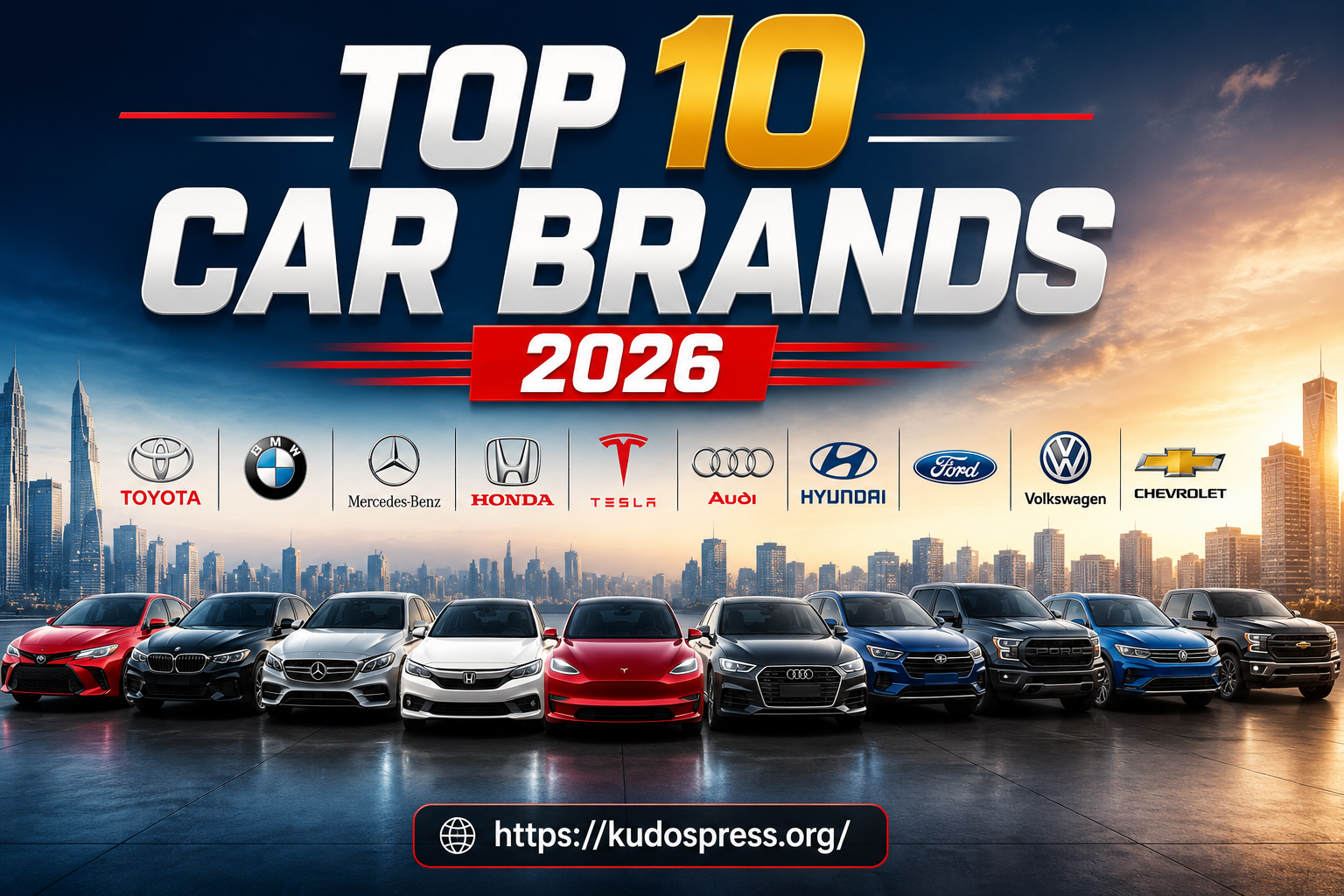
Top 10 Car Brands 2026
The Automotive Horizon: Predicting the Top 10 Car Brands for 2026
Top 10 Car Brands 2026 :The automotive industry is in a perpetual state of transformation, driven by unprecedented technological advancements, shifting consumer priorities, and a global push towards sustainability. From the foundational internal combustion engine to the burgeoning era of electrification, autonomy, and hyper-connectivity, the pace of change has never been more rapid. As we gaze towards 2026, the landscape of leading car brands is poised for significant evolution, with traditional giants battling agile newcomers and innovative disruptors. Predicting the top contenders requires a meticulous analysis of current trends, strategic investments, market penetration, and the ability of manufacturers to adapt to a future defined by software, sustainable practices, and seamless mobility solutions.
This article delves into the dynamic forces shaping the automotive world and offers an informed projection of the top 10 car brands likely to dominate the global stage in 2026. While any forward-looking prediction carries inherent speculation, our analysis is grounded in current technological trajectories, market performance, and the strategic roadmaps laid out by the world’s leading automotive players. We explore how innovation in electric vehicles, autonomous driving, digital integration, and sustainable manufacturing will be the defining metrics of success, differentiating the leaders from the laggards in this intensely competitive environment.
The Evolving Automotive Landscape: Key Drivers for 2026
To understand which brands will lead in 2026, one must first grasp the pivotal forces reshaping the industry. These drivers are not merely trends; they are fundamental shifts dictating investment, research and development, and corporate strategy across the globe.
Electrification at Full Throttle
The transition from fossil fuels to electric powertrains is arguably the most significant shift. By 2026, electric vehicles (EVs) are expected to constitute a substantial portion of new car sales in many key markets, driven by stringent emission regulations, improving battery technology, expanding charging infrastructure, and growing consumer acceptance. Brands that have invested heavily in dedicated EV platforms, supply chain resilience for critical minerals, and robust battery production will be at a distinct advantage. This includes not just battery electric vehicles (BEVs), but also sophisticated plug-in hybrids (PHEVs) that offer a bridge solution. The ability to offer competitive range, rapid charging, and an engaging driving experience will be paramount.
Autonomous Driving: From Niche to Mainstream?
While fully autonomous Level 5 vehicles may still be some years away from widespread adoption, Level 2+ and Level 3 autonomous driving features are rapidly becoming standard in premium and even some mainstream vehicles. By 2026, advancements in sensor technology, artificial intelligence, and V2X (vehicle-to-everything) communication will enable more sophisticated and reliable driver assistance systems. Brands leading in software development, data collection, and robust validation for these systems will gain a competitive edge, enhancing safety, convenience, and ultimately, brand appeal. The challenge lies in navigating regulatory complexities and building public trust.
Connectivity and Software-Defined Vehicles : Top 10 Car Brands 2026
Modern vehicles are increasingly becoming sophisticated mobile computing platforms. Connectivity, enabled by 5G technology, allows for over-the-air (OTA) updates, advanced infotainment systems, predictive maintenance, and new subscription-based services. The concept of a “software-defined vehicle” means that much of a car’s functionality, from powertrain management to user interface, is controlled and updated through software. Brands that can seamlessly integrate hardware and software, offer intuitive user experiences, and develop robust cybersecurity measures will differentiate themselves. This shift also opens new revenue streams beyond initial vehicle sales.
Sustainability and Circular Economy : Top 10 Car Brands 2026
Beyond tailpipe emissions, the entire lifecycle of a vehicle is under scrutiny. Consumers and regulators are increasingly demanding sustainable manufacturing processes, ethical sourcing of materials, and end-of-life recycling solutions. By 2026, brands demonstrating a strong commitment to reducing their carbon footprint across their supply chain, utilizing recycled and renewable materials, and planning for battery second-life applications will resonate strongly with environmentally conscious buyers. This extends to energy efficient factories and transparent reporting of environmental impact.
Geopolitical and Economic Influences : Top 10 Car Brands 2026
Global supply chain disruptions, geopolitical tensions, and fluctuating economic conditions will continue to shape the automotive landscape. Brands with diversified supply chains, regional manufacturing hubs, and the ability to navigate complex trade policies will be more resilient. The growth of emerging markets, particularly in Asia, will also play a crucial role in determining global sales volumes and market share, requiring a flexible and localized approach to product development and distribution.
Predicting the Top 10 Car Brands 2026
Considering the aforementioned drivers, here are our predictions for the top 10 car brands that will likely lead the industry in 2026, based on a combination of sales volume, innovation, brand value, and strategic positioning.
1. Toyota
Toyota’s enduring strength lies in its global scale, unparalleled reputation for reliability, and a pragmatic approach to electrification. While initially cautious on BEVs, its massive investments in solid-state battery technology, a diverse portfolio of hybrids, plug-in hybrids, and fuel-cell vehicles, combined with its strong presence in developing markets, position it for continued leadership. By 2026, Toyota’s increased push into BEVs, leveraging its robust manufacturing capabilities and efficient production systems, will ensure its dominance, especially in terms of overall unit sales and profitability.
The Volkswagen Group, encompassing brands like VW, Audi, Porsche, Skoda, and Seat, has committed an enormous investment to electrification and digitalization. Its scalable MEB and upcoming SSP platforms are designed to underpin millions of EVs across its diverse brands, offering significant economies of scale. By 2026, the group’s comprehensive EV lineup, coupled with its software subsidiary CARIAD, aiming to create a unified software stack, will solidify its position as a global powerhouse, particularly in Europe and China, balancing mainstream appeal with luxury performance.
3. Tesla
Tesla remains a formidable force. Its head start in EV technology, superior battery management, an industry-leading Supercharger network, and a strong brand identity built on innovation and performance will ensure its top-tier status. By 2026, continued advancements in battery cost reduction, manufacturing efficiency (e.g., Gigafactories, structural battery packs), and the potential for a more affordable mass-market vehicle will expand its reach. Its lead in AI and autonomous driving software also gives it a significant long-term advantage, despite increasing competition.
4. Hyundai-Kia
The Hyundai Motor Group has emerged as a true innovator and a major contender in the EV space. Their E-GMP dedicated EV platform, underpinning popular models like the Ioniq 5 and EV6, offers fast charging and impressive range. By 2026, their aggressive expansion into diverse segments, compelling design language, competitive pricing, and a strong focus on advanced connectivity and hydrogen fuel cell technology will see them capture a significant global market share, particularly in Asia, Europe, and North America.
5. Mercedes-Benz
Mercedes-Benz is successfully transitioning its luxury image into the electric era with its EQ sub-brand. By 2026, a full suite of luxury EVs across various segments, from sedans to SUVs, will be firmly established. Their focus on high-end technology, sophisticated interiors, and advanced software-defined features will maintain their appeal to discerning buyers. Mercedes’ strategic partnerships for battery technology and charging infrastructure, combined with its global network, will ensure its continued leadership in the premium segment.
6. BMW
BMW is another premium brand making significant strides in electrification. Their “Neue Klasse” platform, set to launch around 2025, promises a new generation of highly efficient and digitally advanced EVs. By 2026, BMW will offer a compelling range of electric models that retain the brand’s signature driving dynamics. Their investment in hydrogen fuel cell technology for specific applications and their focus on circular economy principles will also contribute to their strong market standing, particularly in the luxury and performance EV segments.
7. General Motors (GM)
GM is undergoing a profound transformation, with an ambitious goal to become primarily an EV company. Its Ultium battery platform is highly scalable and versatile, capable of powering everything from Chevrolet’s mass-market EVs to Cadillac’s luxury offerings and GMC’s electric trucks. By 2026, GM’s strong market presence in North America, significant investment in autonomous driving through Cruise, and a growing EV portfolio will make it a dominant player, particularly with the electrification of its popular truck and SUV segments.
8. Ford
Ford’s “Model e” division signifies its strong commitment to electric vehicles. The success of the Mustang Mach-E and the F-150 Lightning demonstrates its ability to electrify iconic models while maintaining brand appeal. By 2026, Ford’s expanded EV lineup, strong commercial vehicle business (Transit Custom Electric), and strategic investments in software and charging solutions will solidify its position. Its global reach, particularly in North America and Europe, and its focus on robust, practical EVs will resonate with a broad customer base.
9. BYD
China’s BYD (Build Your Dreams) is a vertically integrated powerhouse in the EV space, producing not only electric vehicles but also their core components, especially batteries (Blade Battery technology). By 2026, BYD’s aggressive expansion into international markets, diverse product portfolio ranging from compact cars to luxury sedans and buses, and its cost advantage will make it a top global contender. Its technological prowess and government support in China position it for rapid growth and significant market share gains.
10. Stellantis
Formed from the merger of Fiat Chrysler Automobiles and PSA Group, Stellantis boasts an incredibly diverse portfolio of brands (Jeep, Ram, Peugeot, Citroën, Opel, Fiat, Dodge, Chrysler, Maserati, Alfa Romeo). Its comprehensive EV strategy, leveraging four new STLA platforms (Small, Medium, Large, Frame), will enable it to electrify its entire lineup. By 2026, Stellantis’s ability to cater to various market segments and geographies, combined with its strong presence in North America and Europe, and its focus on software-defined vehicles, will secure its place among the top players.
Beyond the Top 10: Brands to Watch and Emerging Trends
While the top 10 represent the most dominant forces, the automotive world is rich with innovation. Several other brands and trends warrant close attention. Top 10 Car Brands 2026
Chinese Innovators : Top 10 Car Brands 2026
Beyond BYD, companies like Nio, XPeng, Li Auto, and Zeekr are rapidly advancing with innovative battery swap technologies, advanced autonomous driving features, and premium EV offerings. Their aggressive expansion plans into Europe and other markets could see them challenge established players sooner rather than later. Top 10 Car Brands 2026
Luxury and Niche Players : Top 10 Car Brands 2026
Brands like Rivian and Lucid are making waves in specific segments (electric trucks/SUVs and ultra-luxury EVs, respectively). Their success will depend on scaling production and maintaining financial stability. Polestar, Volvo’s performance EV offshoot, is also demonstrating strong growth and design appeal. Top 10 Car Brands 2026
The Software and Services Shift : Top 10 Car Brands 2026
The industry is moving towards a model where software and services generate significant recurring revenue. Companies that excel at data analytics, personalized user experiences, and subscription models will unlock new profit pools, fundamentally altering the traditional car ownership model. Top 10 Car Brands 2026
Supply Chain Resilience and Sustainability : Top 10 Car Brands 2026
The lessons from recent disruptions will drive greater emphasis on resilient and ethical supply chains. Brands that can secure critical raw materials, localize production, and demonstrate strong environmental, social, and governance (ESG) practices will not only mitigate risks but also enhance their brand reputation. Top 10 Car Brands 2026
Frequently Asked Questions (FAQ) : Top 10 Car Brands 2026
How were these predictions for 2026 made?
These predictions are based on an analysis of current market trends, major technological advancements (electrification, autonomy, connectivity), manufacturers’ announced strategic roadmaps and investment plans, current market performance, brand equity, and the ability to adapt to evolving consumer demands and regulatory environments. It considers global sales volumes, innovation leadership, and financial stability, acknowledging the speculative nature of future projections. Top 10 Car Brands 2026
Will traditional gasoline cars disappear by 2026?
No, traditional gasoline cars will not disappear by 2026. While the market share of electric vehicles will significantly increase, internal combustion engine (ICE) vehicles, including mild and full hybrids, will still constitute a substantial portion of new car sales globally. Many regions still lack sufficient EV infrastructure, and consumer preferences vary. However, the trend towards electrification will be undeniable, and the variety of new ICE models introduced will likely diminish. Top 10 Car Brands 2026
What role will autonomous driving play in the top brands by 2026?
By 2026, advanced driver-assistance systems (ADAS) and Level 2+ features (like advanced highway assist) will be commonplace, especially in premium vehicles. Level 3 autonomous driving, where the car can handle specific driving tasks but still requires human intervention, may become available in limited, high-end applications or geofenced areas. Brands that integrate these technologies seamlessly, reliably, and safely will gain a significant competitive edge, enhancing brand value and attracting tech-savvy consumers, even if fully driverless cars are not yet ubiquitous. Top 10 Car Brands 2026
Conclusion
The automotive industry is navigating its most transformative period in a century. The journey to 2026 will be defined by relentless innovation, strategic partnerships, and an unwavering commitment to sustainability. The brands poised to lead are those that can effectively balance legacy strengths with future-forward technologies, embracing electrification, autonomy, and digital integration as core tenets of their strategy. While the precise ranking may shift, the underlying drivers of success—adaptability, technological prowess, global reach, and a keen understanding of evolving consumer needs—will remain paramount. The next few years promise an exhilarating ride as these automotive titans vie for supremacy in a world rapidly rethinking mobility.